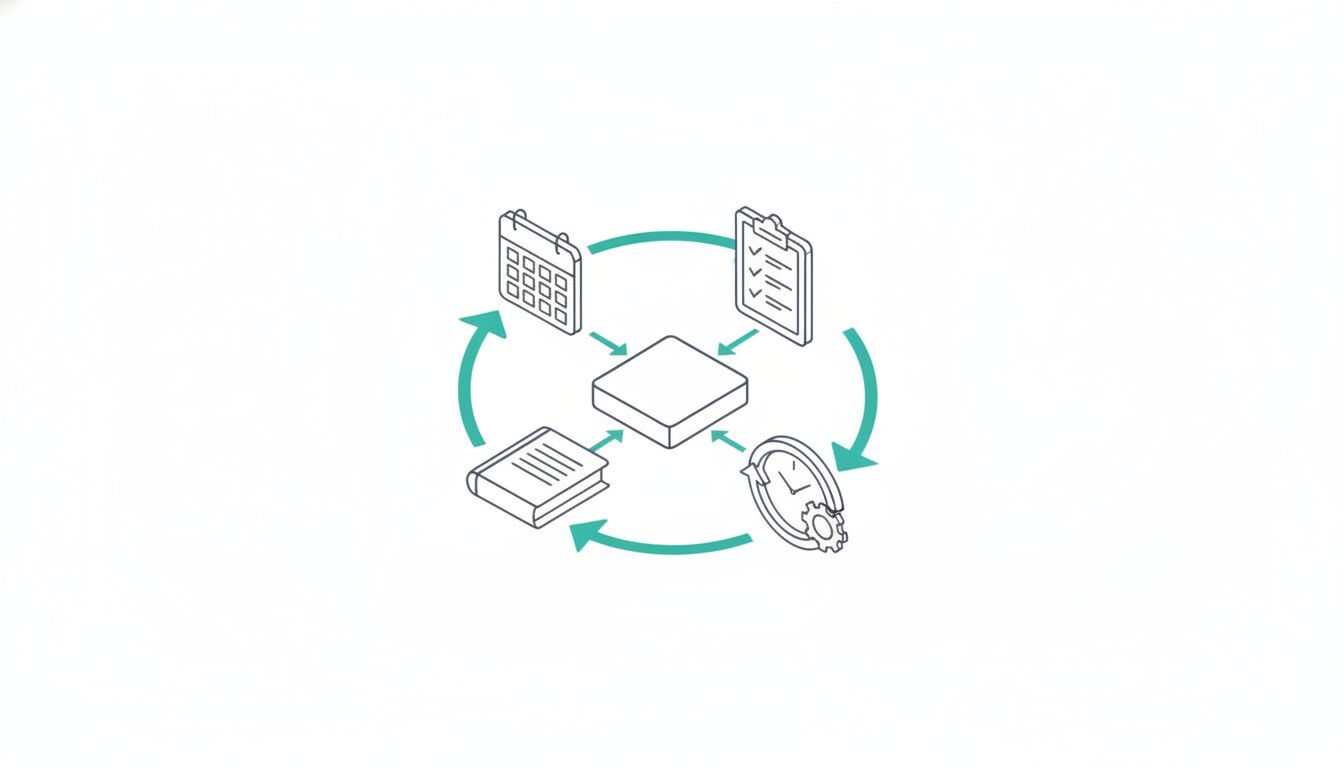
Keep learning assigned, current, measurable, governed, and maintainable. Operate is the line that owns the learning system after the build is finished — and keeps it running.
The problem this line is built for
A build project ends. The courses are published, the launch note goes out, the project channel goes quiet. At that moment the learning system has no owner.
What follows is predictable:
- Courses drift out of date because the process changed and nothing triggered a review.
- Enrolments are done by hand, one starter and one transfer at a time.
- Completion and expiry reporting is a spreadsheet someone rebuilds every quarter from exports.
- The LMS holds files rather than a governed operation — content is stored, not managed.
- Nobody is accountable for whether the training still reflects how the work is actually done.
- When an auditor or a regulator asks who completed what and when, the answer takes days to assemble.
None of that is a content problem. The content generally exists in some form. It is an operations problem: no owner, no cadence, no register, no reporting rhythm. Operate is the line that takes that work on.
What Managed Learning Operations means
Managed Learning Operations is the ongoing running of a learning system across six operating domains. Each domain has named artifacts and a defined cadence, agreed in a service schedule before the service starts.
| Operating domain | What is run |
|---|---|
| Governance | A named owner for each programme, a review calendar with dates, a change and decision record, and a defined route for handling new or changed requirements. |
| Platform Operations | Enrolment rules, groups and audiences, assignment logic, curricula and certification paths, expiry and recertification settings, publishing and retirement — inside the LMS you already use. |
| Content Operations | A content register with review dates and owners, version control, scheduled subject-matter expert review cycles, planned updates, and retirement of superseded material. |
| Records and Reporting | A standing reporting pack on a fixed schedule: who is assigned, who has completed, what expires when, what is overdue, and what changed since the last cycle. |
| Quality and Accessibility | Recurring quality checks against an agreed standard, including accessibility review that supports accessibility improvement and alignment with agreed standards. |
| Workflow Improvement | Reducing manual effort in the operation itself — intake, review routing, templates, reusable patterns, and workflow redesign where it is safe and reviewable. |
The point of the six domains is that the operation stops depending on one person’s memory. Assignment logic is written down. Review dates exist in a register rather than in an inbox. The reporting pack is produced on a schedule, so the audit question is answered from a document that already exists.
Bounded scope
This service has edges, and they are stated before anything is signed:
- No 24/7 helpdesk. Coverage runs within agreed working hours, with response expectations set in the service schedule.
- No unlimited content production. Production volume per period is defined. Work beyond it is scoped and agreed separately rather than absorbed silently.
- No compliance sign-off. IETERNUS is not a regulator, a law firm, or a certification body. The service maintains records, evidence, and review discipline. It does not certify that you are compliant.
- No platform engineering. The service configures and operates the platform you have. It does not include custom software development or integration engineering beyond agreed configuration.
IETERNUS is not an LMS vendor and does not sell or host a platform. That independence is the reason the operating view can be honest about what the platform is and is not doing.
Bridge or ongoing managed service
There are two ways to take this on. They solve different problems.
| 90-Day Learning Operations Bridge | Managed Learning Operations | |
|---|---|---|
| Shape | Fixed-length interim coverage. | Ongoing relationship with standing accountability. |
| Typical trigger | A learning operations role is vacant, a hire is in progress, a system has just been inherited, or a build has just landed with no owner. | The organisation has decided it does not want to carry the operation permanently in-house. |
| What it produces | Continuity now, plus a documented operating picture: content register, assignment model, reporting pack, and the gaps found along the way. | The same six domains run continuously, with a review cadence and a change record that accumulate over time. |
| How it ends | Handover to your incoming hire, or a decision to continue. | Reviewed at agreed intervals; scope adjusted deliberately, not by drift. |
The Bridge is the honest first step where that is the case. Ninety days of running the operation reveals what the operation actually contains, which makes any longer decision a scoped one rather than a guess.
Improvement belongs to this line
AI-enabled L&D Workflow Design sits inside Operate as the improvement capability. It is applied to the operation — intake, drafting support, review routing, tagging, reporting preparation — not used to mass-generate courseware. Human review stays in the workflow, and every change is documented so the operation remains explainable to an auditor. IETERNUS is not a mass AI content generator, and this capability is not a route to becoming one.
Where this fits
- A live LMS holding published content that nobody currently owns.
- Assignment, completion, and expiry tracked in spreadsheets rebuilt by hand.
- A small learning team carrying delivery and operations at the same time, and losing to whichever is louder.
- A finished build already drifting out of step with how the work is done.
- A vacant learning operations role with a hiring process still running.
Where it does not fit
- You want to buy or host a learning platform.
- You need round-the-clock learner support.
- You want a supplier to sign off legal or regulatory compliance.
- You want unlimited content production held inside a fixed ongoing scope.
- You want extra hands without governance, ownership, or a written operating model.
The way in
The entry point is a review of the current operation: how assignment works today, what state the content register is in, how reporting is produced, where governance is missing, and whether interim coverage or an ongoing service is the right answer. The output is a scoped recommendation, not a proposal to sign on the spot.
Request a Learning Systems Review
Need coverage while hiring? Explore the 90-Day Learning Operations Bridge.